
“The goal of life is meaning, not happiness.” — James Hollis,
Hi there,
Does non-duality imbue life with meaning, or strip it away?
I was first introduced to non-duality as a way to reduce suffering. As with idealism, it proposes that the substance of existence is consciousness, much like a dream. Knowing reality as a dream, worry, regret and anxiety can all fade into insignificance.
But this view can teeter precariously close to nihilism.
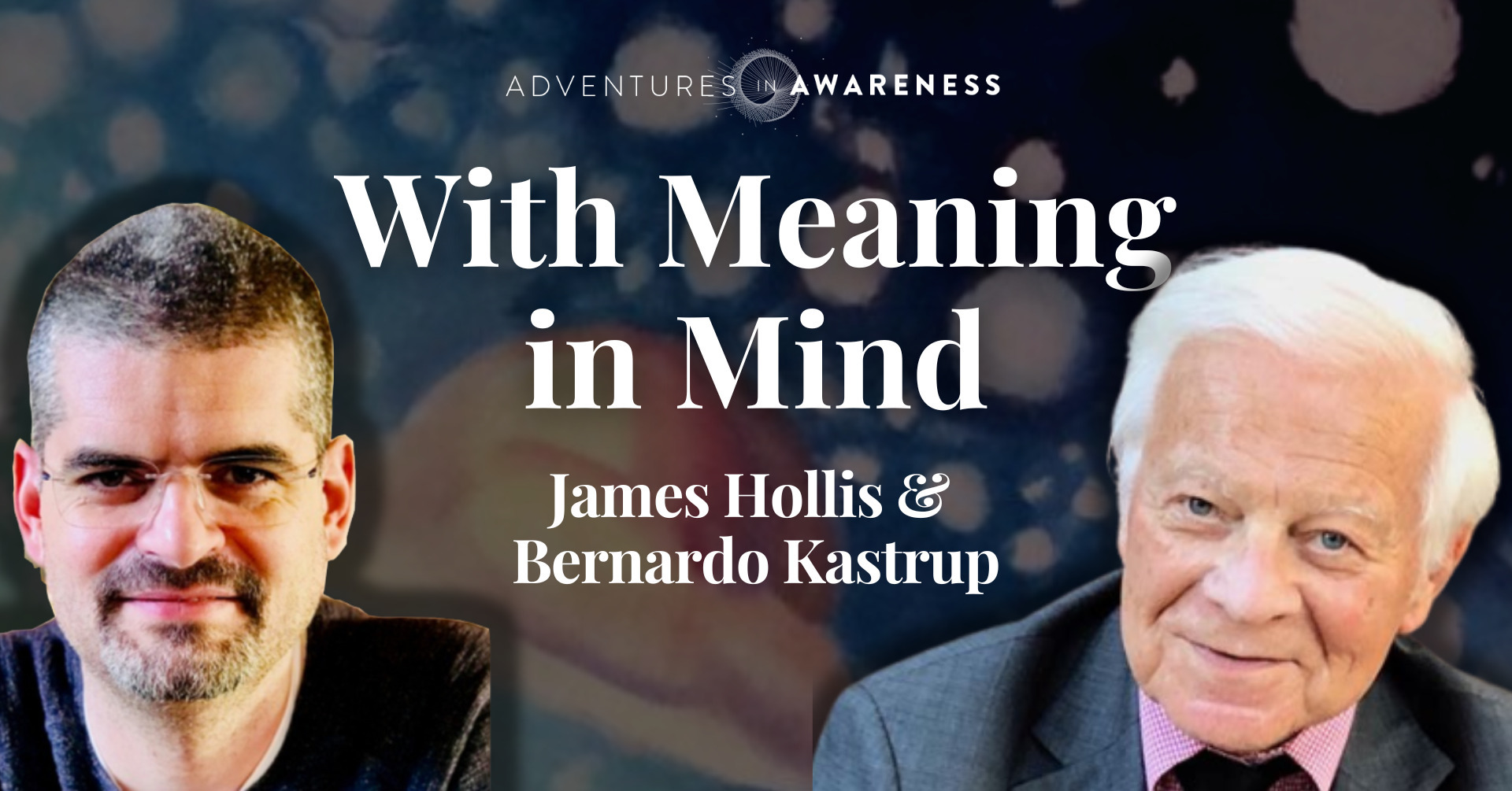
So I was intrigued to discover that James Hollis and Bernardo Kastrup have great admiration for each other.
Bernardo is famous for his rational and scientific defence of idealism and James is widely regarded as the world's leading Jungian analyst, famously declaring the goal of life is meaning, not happiness.
James believes that there is “something inherent to each of us that is not only curious, but is hungry. And that hunger is for meaning and purpose.”
But he also observed that many people are living in ways that don't feel meaningful to them. Worse, they don’t even know what to do about it. When asked, they say “I just don’t know what interests me. I don’t know what I want from my life.”
It is necessary to adapt to our family and society when young, but after decades of needing to fit in, something goes numb. The adaptation separates us from our own inner voice and “we lose contact with our own truth and we live separated from our own souls.”
Although incredibly common, lack of meaning doesn’t show up in psychiatric manuals - it's not even categorised as a disorder. Yet James believes that “more people suffer from a disconnect from meaning than any other cause” and is the problem of our time.
As a depth psychologist, he helps people reconnect with their inner knowing and live with meaning and purpose. You can find many inspiring books and interviews online, and I especially enjoyed this one.
WAKING UP OR NUMBING OUT?
Meanwhile, so much of the narrative around meditation is about escape from suffering.
If unskillful, this could merely replace the numbing effects of adaptation with a deliberate dissociation from its consequences.
What if some forms of suffering are a call from deep within, away from distraction towards a unique flowering that life wants to live through you? Perhaps, as James says, the goal of life is meaning, not happiness.
After all, if the sole purpose of life is to merge back to oneness, why would the one go to the very great trouble of appearing as many?
For Bernardo, the Western path of idealism does not entail an escape from the richness and rigour of life. “Though excruciatingly difficult sometimes,” he says, "it offers the potential for breakthroughs that will fill you with meaning and contentment to the point of bursting."
BUT WHAT LINKS JUNG WITH METAPHYSICS?
This coming Monday, Bernardo and James will dialogue on this exact question.
We'll ask how Jung’s insights on archetypes, shadow and individuation might bridge idealism into the texture of an actual human life.
Could idealism transform our approach to meaning, purpose and our vocation? (From the Latin “vocatio”, meaning “a call.”) This call is never about making money or being important, but rather something far more personal, private and unique.
Perhaps seeing the world not as dead matter but as living mind can imbue our relationships with meaning, our path with purpose, and help us better hear the call to become who we are.
Click here to register. Event is live and a recording sent to everyone registered.
“our cultural icons—success, peace, happiness, and distraction—pale before the question of whether or not one experiences this life as meaningful.” - James Hollis
"The Western path, though excruciatingly difficult sometimes, offers the potential for breakthroughs that will fill you with meaning and contentment to the point of bursting." - Bernardo Kastrup
Hoping to see you there!
Amir