Psychedelics & Relationships 4-Week Course with Sarah Tilley
| Nov 11 |
Wed 11th Nov 2026
2pm – Wed 2nd Dec 2026, 3:30pm EST (UTC -05:00)
4 sessions
|

|
Online |

|
https://dandelion.events/e/q0chg |
| Promoted by |
 The Psychedelic Society
|
| Attending |
< 10 people
|
| Enquiries to | ryan@psychedelicsociety.org.uk |
| Add to calendar | Google · ICS |
| QR code |

|
Psychedelics & Relationships - A Four-Week Course with Sarah Tilley
Exploring love, attachment, intimacy, sexuality, and what happens when psychedelic experiences enter relationships
Join individual sessions or access the full four-part course. All sessions are recorded and available to participants.
About
Psychedelic research has largely focused on the individual: the individual brain, the individual experience, and the individual therapeutic outcome. But human beings live in relationships.
We fall in love, attach, have sex, raise families, fight, repair, care for one another, grow apart and sometimes find our way back. Our closest relationships can become both a source of profound wellbeing and the place where some of our oldest patterns are repeatedly activated.
In this four-part series, couples therapist and psychedelic practitioner Sarah Tilley will guide us from the origins of our relationship patterns, through sex and intimacy, into the psychedelic relational experience itself and finally ask what it takes for an extraordinary experience to become sustained change in ordinary life.
Drawing on more than two decades of therapeutic practice, her work with couples using legal psilocybin in the Netherlands, and research collaboration with Imperial College London, Sarah brings together attachment, sexuality, trauma, embodiment, relationship therapy, altered states and emerging relational science.
Rather than presenting psychedelics as a quick fix for struggling relationships, the series explores a more complex proposition:
Psychedelics may create an opening. Relationships are where change has to learn how to live.
Central questions we will cover:
- How much of the person we become inside a relationship belongs to the relationship we are in — and how much was learned long before it began?
- When desire disappears, is sex the problem - or is the body communicating something about the wider relationship?
- If psychedelics can temporarily change our experience of the self, what happens to the space between two selves?
- How does an extraordinary experience become an ordinary way of living together?
Led by Sarah Tilley, each session is delivered live online via Zoom and runs for 90 minutes.
Highlights
- Four-part exploration of psychedelics, love and relationships
- Attachment, developmental patterns and adult intimacy
- Sexuality, desire, embodiment and changing relationships
- What happens when psychedelics enter the relational field
- Shared vs. separate psychedelic experiences within couples
- The role of vulnerability, emotional regulation and co-regulation
- Integration and translating psychedelic insights into everyday relationships
- Emerging research alongside clinical and real-world observations
- Live audience discussion and Q&A
- Recordings available for all registered participants
- Attend individual sessions or join the full series
Who is This Course For?
This series is designed for anyone interested in the intersection of psychedelics and human relationships.
It may be particularly relevant to:
- People interested in psychedelic experiences and integration
- Couples and individuals interested in relationship psychology
- Therapists, counsellors and helping professionals
- Practitioners working with psychedelics or altered states
- Those interested in sexuality, intimacy and embodiment
- People interested in attachment, trauma and emotional regulation
- Researchers and students exploring psychedelic science
- Anyone curious about how profound individual experiences interact with the relationships in which we live
No clinical or scientific background is required.
This series is educational and exploratory and is not a substitute for medical advice, psychotherapy or individual assessment.
Curriculum:
Session 1: Why Love Is So Difficult: Attachment, selfhood and the unconscious relationship
Wednesday 11 November 7–8:30 PM UK / 2-3:30 PM EST
Why can the person we love most become the person who activates us most deeply?
We don't enter relationships as blank slates. Long before our first adult relationship, we begin learning what closeness feels like, whether our needs will be met, how much of ourselves it is safe to express, and what we need to do to maintain connection.
These early adaptations can reappear decades later inside intimate relationships.
This opening session explores the psychological architecture beneath adult relationships - attachment, developmental experience, emotional regulation, autonomy and differentiation - and asks what psychedelics may reveal about patterns that ordinarily remain difficult to see.
Sarah will also explore an important observation emerging from her work with couples: sometimes greater intimacy begins not by becoming closer to our partner, but by becoming more connected to ourselves.
We will explore:
- How early attachment experiences can shape adult intimacy
- Why partners can activate old emotional survival strategies
- Pursuit, withdrawal, accommodation and other repeating relationship patterns
- Losing ourselves inside relationships
- Differentiation: remaining ourselves while remaining connected
- Emotional regulation and co-regulation
- The difference between reacting to our partner and reacting from our history
- How altered states may bring previously defended or disconnected parts of ourselves into awareness
- Why insight is only the beginning of relational change
Central question:
How much of the person we become inside a relationship belongs to the relationship we are in and how much was learned long before it began?
Session 2: Where Did the Sex Go? Desire, intimacy and the changing body
Wednesday 18 November 7–8:30 PM UK / 2-3:30 PM EST
How can two people love one another and stop wanting one another?
Sexual disconnection is one of the most common and painful experiences in long-term relationships, yet desire rarely exists independently of the rest of our lives.
Stress, resentment, caregiving, parenting, hormones, ageing, illness, work, identity, emotional safety and our relationship with our own bodies can all enter the bedroom with us.
Rather than treating libido as an isolated problem, Sarah explores sexuality as part of a much larger relational ecosystem - and considers what altered states may contribute to our understanding of embodiment, vulnerability and erotic connection.
We will explore:
- Why desire changes across long-term relationships
- Love, attachment, intimacy and eroticism
- Familiarity, autonomy and the erotic self
- Stress, resentment and the loss of sexual connection
- Menopause, hormones, ageing and changing identity
- Caregiving, work and life transitions
- Emotional repair and sexual reconnection
- Embodiment, touch and vulnerability
- What altered states may reveal about sexuality and the body
Central question:
When desire disappears, is sex the problem - or is the body communicating something about the wider relationship?
Session 3: Two People, One Trip
Wednesday 25 November 7–8:30 PM UK / 2-3:30 PM EST
What happens when psychedelics enter the relational field?
Most psychedelic research begins with an individual.
But a couple is not simply two individuals sitting next to each other.
There is me, you — and us.
Each partner brings an attachment history, nervous system, sexuality, defences and expectations. Together, they create a relational system that can have patterns of its own.
So what happens when psychedelics enter that system?
Drawing on Sarah's work with couples and emerging psychedelic research, this session explores what can happen when altered states change the way people experience themselves and one another — including shared and separate psychedelic experiences.
We will explore:
- Moving from the individual mind to the relational field
- The couple as a dynamic system
- Me, you and us
- Separate versus shared psychedelic experiences
- Vulnerability, emotional disclosure and relational safety
- Experiences of closeness, connection and merging
- Self–other boundaries and differentiation
- When one partner changes more quickly than the other
- Projection, power, consent and relational ethics
- Co-regulation and the relationship as a place of safety
- How relational change may ripple into families and children
- Why an intense psychedelic experience is not necessarily the same as intimacy
Central question:
If psychedelics can temporarily change our experience of the self, what happens to the space between two selves?
Session 4: Can Psychedelics Change a Relationship?
Wednesday 2 December 7–8:30 PM UK / 2-3:30 PM EST
The trip is only the beginning
A psychedelic experience may last hours.
A relationship unfolds over years.
The final session asks perhaps the most important question of the series: what does it take for a psychedelic insight to become sustained relational change?
Sarah draws together lessons from clinical practice, psychedelic couples work and emerging research to explore what happens after the breakthrough — when people return to children, work, ageing parents, financial pressures, old arguments and familiar patterns.
The session will distinguish between established evidence, emerging research and clinical observation, while exploring how relational change might be supported and measured over time.
We will explore:
- The difference between a psychedelic breakthrough and sustained change
- Why old relationship dynamics can return
- Integration as a relational process
- Individual development within couple development
- Purpose, agency and creativity as relational variables
- Emotional and sexual reconnection
- Rupture, repair and practising new behaviours
- What emerging research suggests about psychedelics and relationships
- How relationship wellbeing might be measured over time
- Couples, children and the wider family system as future areas of research
- Where psychedelic relational science might go next
Central question:
How does an extraordinary experience become an ordinary way of living together?
What You'll Gain
Across the four sessions, participants will develop a richer understanding of intimate relationships through a psychedelic and relational lens.
You will explore how developmental history influences adult partnership; why sex and desire change over time; how psychedelic experiences can affect connection, selfhood and relational dynamics; and why integration may need to take place not only within the individual but between people.
The series also offers an introduction to the emerging field of psychedelic couples research, distinguishing between established knowledge, early findings, clinical observation and questions that remain unanswered.
Above all, it offers a different way of thinking about psychedelic transformation:
Not only "What happened to me?" but "What happens between us now?"
The Series Journey
The four sessions form a progressive exploration of relationships across four dimensions:
PAST → BODY → ALTERED STATE → TIME
Session 1 - Past
Where did our ways of loving come from?
Session 2 - Body
What happens to sex, desire and intimacy as two lives unfold together?
Session 3 - Altered State
What happens to me, you and us when psychedelics enter the relational field?
Session 4 - Time
What allows an experience to become sustained relational change?
Together, the sessions explore an emerging question within psychedelic practice:
What if the unit of transformation isn't always the individual?
Format
Four live 90-minute online sessions
Each session combines teaching, clinical and real-world observations, emerging research and time for audience questions and discussion.
The sessions are educational rather than practitioner training. Sarah may discuss anonymised and composite clinical material where appropriate, with identifying details removed or changed to protect confidentiality.
The course does not advocate psychedelic use and will distinguish throughout between clinical observation, established evidence, emerging research and areas where evidence remains limited.
Sarah Tilley
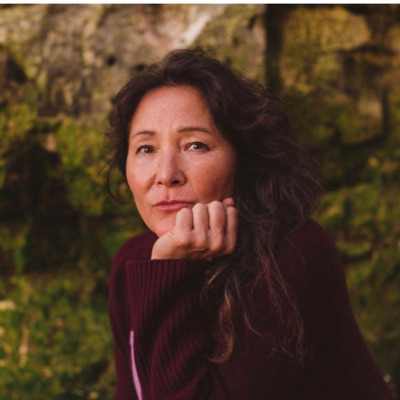
Sarah Tilley is a couples therapist, psychedelic practitioner and founder of Beautiful Space, where she specialises in relationship wellbeing and psychedelic-assisted relational therapy.
Her work brings together more than two decades of experience working with relationships, intimacy, sexuality and personal development with contemporary psychedelic practice.
Through Beautiful Space, Sarah has developed a structured approach to working with couples incorporating psychological preparation, legal psilocybin experiences in the Netherlands and longer-term therapeutic integration.
She has also collaborated with researchers at Imperial College London on observational research exploring psilocybin-assisted relational therapy with couples.
Your Organiser
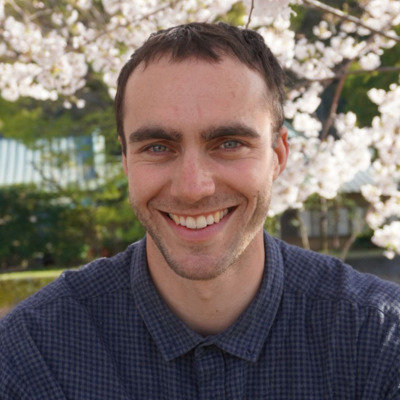
Ryan Khan is the Online Events Coordinator for The Psychedelic Society and a life-long psychedelic enthusiast. He is completing his MSc in Psychedelics: Mind, Medicine & Culture at The University of Exeter where he specialised in the extra-pharmacological factors affecting psychedelic assisted therapy. Ryan also sits at the intersection of psychedelic research, education and therapy. He works as a Research Associate at Pneuma Science and Content Lead at PsyStandard.
REFUNDS POLICY: Please note, we do not arrange refunds or exchanges. When possible we encourage reselling on Ticketswap.
ACCESS: We do our best to include everyone in our events, regardless of health circumstances. If you have access requirements please email the event organiser directly to discuss. Many facilitators are able to offer reduced ticket prices for those truly unable to afford the ticket price. If this applies to you, do please get in touch with the event organiser.
For PSYCHEDELIC KNOWLEDGE AND RESOURCES please check out the Psychedelic Society website.
Our facilitators have agreed to our code of conduct. Learn about our procedure for raising concerns
MEMBERS of the Psychedelic Society get a discount off almost all of our events.
Join from £5 a month and become part of this amazing community with invites to special events and more.